When was the last time anyone checked the coils inside your commercial AC system? If you cannot remember, there is a good chance your cooling system is already working harder than it should be.
Commercial AC units run for long hours every single day. They push air through ductwork, regulate temperatures across large spaces, and keep your building comfortable for employees, customers, and clients. But behind all of that performance, there are two sets of coils doing the heavy lifting. And over time, those coils get dirty.
Dirty coils are one of the most overlooked problems in commercial AC maintenance. They reduce cooling capacity, drive up energy costs, and put enormous strain on the entire system. In many cases, businesses only discover the issue after an unexpected breakdown or a sudden spike in their electricity bills.
This guide walks you through everything you need to know about commercial AC coil cleaning. From the warning signs to the cleaning process and everything in between, you will learn how to spot the problem early and what to do before it becomes expensive.
What Does Coil Cleaning Mean in a Commercial AC System?
Before getting into the warning signs, it helps to understand what coils actually do inside your AC system and why commercial HVAC cleaning is so important.
Every commercial air conditioning unit contains two sets of coils.
Evaporator Coils
Evaporator coils are located inside the air handling unit. They absorb heat from the air inside your building. As warm air passes over the cold coils, the refrigerant inside absorbs the heat and transfers it out of the space. The result is cooler, conditioned air circulating back into your building.
Because evaporator coils are constantly in contact with indoor air, they collect dust, dirt, and biological contaminants very quickly. Over time, a thick layer of buildup forms on the surface of the coils, which blocks the heat transfer process entirely.
Condenser Coils
Condenser coils are located in the outdoor unit. Their job is to release the heat that was absorbed from inside the building out into the open air. For this process to work efficiently, the coils need a clear surface for heat dissipation.
In outdoor environments, condenser coils are exposed to dust, pollution, debris, and in some locations, grease or industrial contamination. When that buildup accumulates, the coils lose their ability to release heat properly, and the system starts to struggle.
Regular evaporator coil cleaning and condenser coil cleaning are both essential parts of a complete commercial HVAC cleaning program. Neglecting either one will reduce system efficiency and shorten the lifespan of your equipment.
Why Dirty AC Coils Are a Serious Problem for Businesses
A little dust might seem harmless, but when it builds up on AC coils, the consequences are far from minor. Dirty coils create a chain reaction of problems that affect your comfort, your costs, and your equipment.
Reduced cooling performance is the most immediate effect. When coils cannot transfer heat efficiently, your AC system produces less cooling output. Spaces feel warmer than they should, even when the system is running at full capacity.
High energy consumption follows closely behind. A system struggling to cool your building will run for longer periods and work harder than necessary. That extra effort shows up on your electricity bill every single month.
Poor indoor air quality is another concern that many businesses underestimate. Dirty coils can harbour mould, bacteria, and allergens. When air passes over contaminated coils, those particles circulate throughout your building and into the breathing space of everyone inside.
System overheating becomes a real risk when coils are severely clogged. The compressor and other components are designed to operate within specific temperature ranges. When coils cannot release heat properly, internal temperatures rise and components begin to fail.
Unexpected breakdowns are the most disruptive outcome. A commercial AC failure in the middle of summer is not just uncomfortable. It can disrupt operations, affect productivity, and create a poor experience for customers and clients.
Reduced equipment lifespan is the long term cost that businesses often fail to calculate. An AC system that constantly runs under stress will wear out years before it should. Regular commercial air conditioning cleaning is one of the most effective ways to protect that investment.
Top Signs Your Commercial AC Needs Coil Cleaning
Knowing the warning signs is the key to catching coil problems early. Here are the most common indicators that your commercial AC system is due for coil cleaning.
Weak Cooling Performance
If your AC is running but the building does not feel as cool as it should, dirty coils are often the reason. A layer of dust and debris on the evaporator coil acts as insulation. It prevents the refrigerant from absorbing heat effectively, which means less cooling is delivered into the space.
This is especially noticeable in large commercial spaces like office floors, retail stores, or warehouses where consistent temperatures are critical.
Higher Electricity Consumption
A sudden or gradual increase in your energy bills without any obvious explanation is a classic sign of an inefficient AC system. When coils are dirty, the system compensates by running longer cycles and drawing more power to achieve the same output.
Over a year, the extra energy consumption from dirty coils can be substantial. Improving AC efficiency through regular coil cleaning is one of the most cost effective maintenance decisions a business can make.
Poor Airflow From Vents
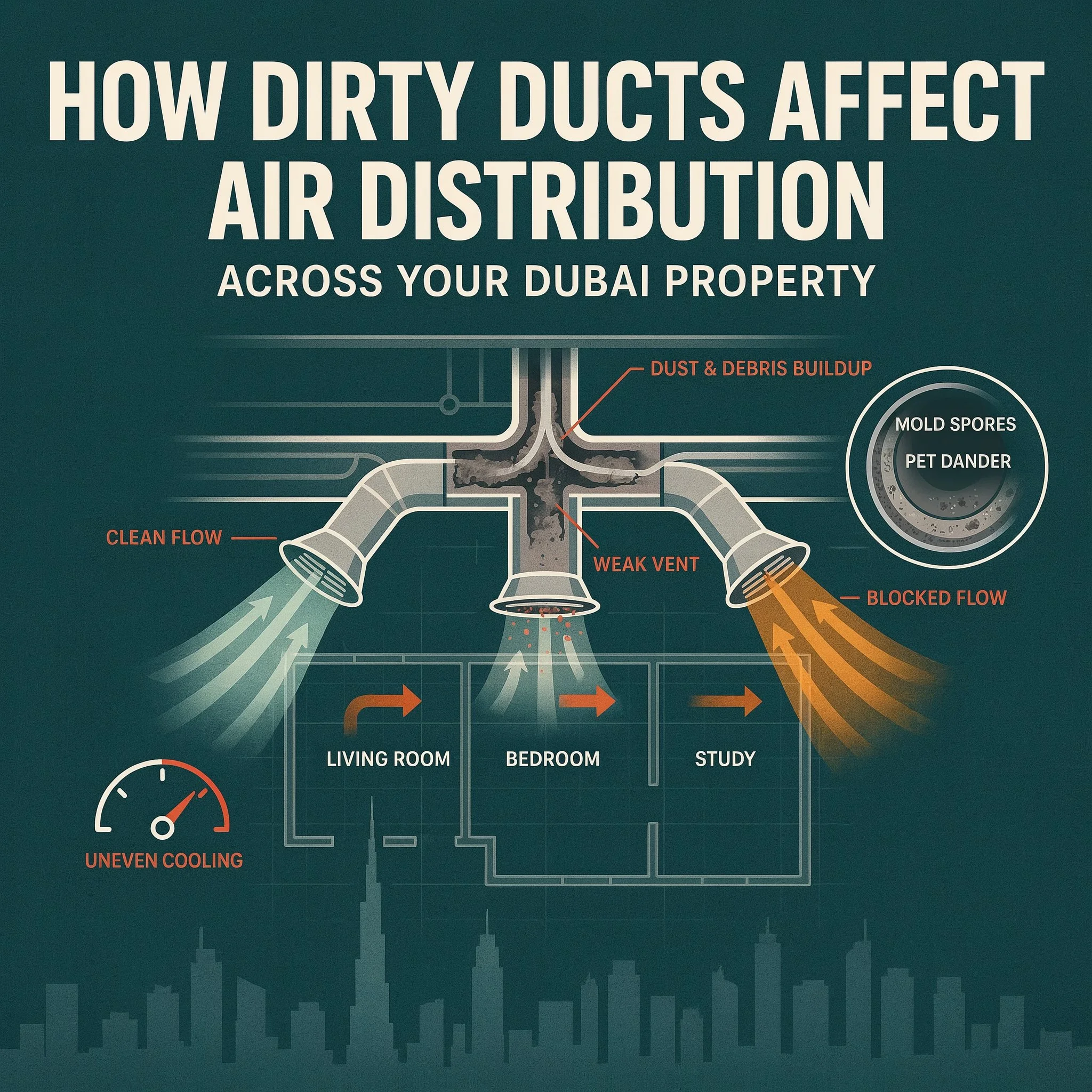
If the airflow from your vents feels weaker than usual, the evaporator coil may be heavily clogged. A thick layer of dirt restricts the amount of air that can pass through the coil, reducing airflow across the entire system.
In some cases, the issue is combined with a dirty air filter, which makes the problem even more severe. Either way, restricted airflow is a clear signal that HVAC coil maintenance is overdue.
Strange Odors Inside the Building
Musty or stale odors coming from your vents are a strong indication that mould or bacteria have developed on the evaporator coil. These microorganisms thrive in the cool, damp environment inside the air handler, and once they take hold, every breath of conditioned air carries their presence.
For businesses like clinics, restaurants, and hotels, air quality is directly linked to the experience of guests, patients, and diners. Strange odors from AC vents should never be ignored.
Ice Formation on Coils
Ice on the evaporator coil is not a normal operating condition. It happens when airflow is so restricted by dirt buildup that the coil temperature drops below freezing. The condensation on the coil surface turns to ice rather than draining away.
If you notice ice forming around the indoor unit or see frost on any part of the system, shut it down and contact a professional immediately. Continued operation in this condition can damage the compressor and lead to expensive repairs.
AC Running Continuously
A properly functioning AC system will cycle on and off as it maintains the target temperature. When coils are dirty, the system struggles to reach that target and keeps running without shutting off.
Continuous operation without reaching the set temperature is a clear sign that heat transfer efficiency has dropped. Commercial HVAC cleaning can restore the system to its normal operating cycle and reduce the strain on all components.
Uneven Temperatures in Different Areas
If some areas of your building feel comfortable while others feel warm or stuffy, the issue may trace back to dirty coils reducing overall system capacity. When the system cannot produce sufficient cooling, it distributes what it can unevenly across the space.
This is a common complaint in large office buildings, shopping malls, and industrial facilities where consistent climate control is essential for comfort and productivity.
Frequent HVAC Repairs
If your maintenance team or HVAC contractor is being called out more often than usual, it is worth looking at the coils as a root cause. Dirty coils put additional stress on the compressor, fan motors, and electrical components. That stress leads to accelerated wear and more frequent failures.
Rather than repeatedly fixing the symptoms, addressing the root cause through commercial AC coil cleaning can dramatically reduce repair frequency.
Excess Dust Around the Workplace
If surfaces in your building seem to accumulate dust faster than usual, your AC system may be circulating contaminated air. Dirty coils and clogged filters allow particles to bypass the filtration system and settle on furniture, equipment, and floors throughout the space.
This is not just a cleanliness issue. Excess airborne dust affects air quality and can trigger respiratory problems in employees and visitors.
Water Leakage Around the Unit
Water pooling around the indoor air handling unit is often a sign that the drain pan is overflowing. This can happen when ice forms on a dirty evaporator coil and then melts in large volumes, or when the coil surface is so contaminated that condensate cannot drain properly.
Water leakage around commercial AC units should be treated as an urgent problem. Prolonged leaks can damage ceilings, walls, flooring, and electrical systems, adding significant costs beyond the AC repair itself.
How Dirty Coils Affect Energy Efficiency
The relationship between coil cleanliness and energy efficiency is direct and measurable. Understanding this connection helps businesses see coil cleaning not as a cost but as an investment.
When coils are covered in dirt, they lose their ability to transfer heat efficiently. The refrigerant has to work harder and longer to absorb or release the same amount of heat. This is called restricted heat transfer, and it is the core reason why dirty coils waste energy.
As heat transfer becomes less efficient, the compressor picks up the slack. The compressor is the most energy intensive component in any AC system. When it has to run harder and longer than designed, power consumption rises significantly.
Over time, the compressor also suffers from the added workload. Components that are designed to operate within specific load limits begin to wear out prematurely when those limits are consistently exceeded.
Regular HVAC preventive maintenance, which includes coil cleaning as a core element, keeps heat transfer efficient, reduces compressor load, and ensures the system operates within its designed energy parameters. The result is lower electricity bills, a longer system lifespan, and fewer unexpected failures.
Common Causes of Dirty Commercial AC Coils
Understanding what causes coil buildup helps businesses implement better preventive strategies and know when to schedule cleaning more frequently.
Dust and airborne particles are the most universal cause. In any occupied building, human activity, clothing, and general movement generate a constant stream of airborne dust. Over time, this settles on evaporator coils and accumulates into a dense layer.
Construction debris is a serious concern for businesses in or near active construction zones. Fine particles from cutting, drilling, and demolition work are highly abrasive and can coat coils quickly. Buildings undergoing internal renovation are particularly vulnerable.
Grease and kitchen contaminants affect restaurants, commercial kitchens, and food production facilities. Grease particles that enter the air handling system coat the evaporator coil and create a sticky surface that attracts additional debris. This type of buildup is particularly damaging and requires more intensive cleaning.
Outdoor pollution affects condenser coils in urban and industrial areas. Vehicle emissions, industrial exhaust, and general air pollution leave residue on outdoor coil surfaces that reduces heat dissipation efficiency.
Lack of regular maintenance is the most preventable cause of all. Businesses that skip routine HVAC inspections allow minor buildup to become major obstruction over months and years. Consistent maintenance schedules prevent this from happening.
Humid environments accelerate the growth of mould and biological contaminants on coil surfaces. In regions with high ambient humidity, coils that are not regularly cleaned can develop microbial colonies that affect air quality throughout the building.
How Often Should Commercial AC Coils Be Cleaned?
There is no single answer that applies to every commercial property. The right cleaning frequency depends on the type of facility, how the space is used, and the environment the system operates in.
Office buildings in typical environments generally benefit from coil cleaning once or twice a year. Air in office settings is not particularly heavy in contaminants, but high occupancy and continuous AC operation mean buildup still accumulates at a steady rate.
Restaurants and commercial kitchens require much more frequent cleaning, typically every three to four months. Grease particles, steam, and cooking byproducts move through kitchen ventilation systems and can cause rapid and severe coil contamination.
Warehouses and industrial spaces should schedule cleaning at least twice a year, and more frequently if operations generate significant airborne particles, chemicals, or dust. Industrial AC cleaning often requires more robust methods due to the nature of the contamination.
Healthcare facilities including clinics, hospitals, and medical centers require strict air quality standards. Coil cleaning in these environments is typically scheduled quarterly to maintain hygiene levels and protect patient health.
Retail stores benefit from biannual cleaning as a minimum, with additional checks during peak business periods when foot traffic and system load are highest.
Industrial spaces and factories with heavy dust or chemical exposure may need coil cleaning as frequently as every two to three months. The specific environment determines the schedule.
Seasonal maintenance recommendations apply broadly to all commercial facilities. Scheduling a coil cleaning before the peak cooling season ensures your system is ready to perform at its best when it is needed most.
Professional Commercial AC Coil Cleaning Process
Understanding what happens during a professional coil cleaning service helps businesses know what to expect and why the process matters.
Inspection is the first step. A qualified technician will assess the overall condition of the AC system, identify which coils require cleaning, and check for any additional issues that may be affecting performance.
System shutdown follows inspection. Safely isolating the unit before any cleaning begins is essential for technician safety and equipment protection. Attempting to clean coils while the system is running can cause damage and injury.
Coil assessment involves a closer examination of the coil surface to determine the type and severity of the contamination. This step helps the technician select the appropriate cleaning method and chemical agents.
Safe cleaning methods are then applied. For moderately dirty coils, compressed air or low pressure water rinsing may be sufficient. For heavier buildup, specialised foaming coil cleaners are applied to break down grease, dirt, and biological matter without damaging the coil fins.
Chemical cleaning uses biodegradable, non corrosive coil cleaning agents that are designed to penetrate and lift contamination from deep within the coil. These products are selected based on the coil material and the type of buildup present.
Rinsing follows the cleaning process to remove all residue from the coil surface and drain pan. Thorough rinsing ensures that no chemical residue remains in the system, which could affect air quality or damage components.
Performance testing is the final step. After the system is restarted, the technician checks airflow, temperature differential, and system pressures to confirm that the cleaning has restored proper performance. Any remaining issues are identified and addressed before the job is complete.
Benefits of Regular Commercial AC Coil Cleaning
Consistent coil cleaning delivers measurable improvements across multiple aspects of your commercial cooling system.
Better Cooling Performance
Clean coils transfer heat efficiently, which means your system can deliver the cooling output it was designed for. Spaces reach and maintain comfortable temperatures without the system straining to keep up.
Lower Energy Usage
When heat transfer is unobstructed, the compressor runs for shorter cycles at lower load. The direct result is reduced electricity consumption and lower operating costs month after month.
Cleaner Indoor Air
Removing mould, bacteria, and accumulated particles from the coil surface means the air circulating through your building is genuinely cleaner. This benefits employee health, reduces allergens, and creates a more comfortable environment for everyone in the building.
Longer HVAC Lifespan
An AC system that operates efficiently under normal load conditions will outlast one that runs under constant stress. Regular commercial air conditioning cleaning is one of the most effective ways to protect your equipment investment and delay the need for costly replacements.
Reduced Emergency Repairs
Most emergency AC failures in commercial buildings are preventable. Clean coils eliminate one of the most common root causes of system breakdowns, reducing the frequency of urgent call outs and the disruption they cause to your operations.
Improved Workplace Comfort
Consistent temperatures, clean air, and reliable cooling create a workplace environment where employees can focus and perform effectively. Comfort has a direct impact on productivity, and regular office AC maintenance is a key part of maintaining it.
DIY Cleaning vs Professional AC Coil Cleaning Services
Some businesses attempt to handle coil cleaning internally, but commercial systems require a very different approach from residential units.
The risks of DIY cleaning in a commercial setting are significant. Commercial AC coils are made from delicate aluminium fins that are easily bent or damaged by improper handling. Damaged fins reduce airflow and require expensive repairs. Using the wrong cleaning agents can corrode coil materials, void warranties, and create new problems while attempting to solve the original one.
Commercial systems require professional equipment. High pressure cleaning systems, specialised foaming agents, and proper personal protective equipment are all necessary for a safe and effective job. Most facilities teams do not have access to these tools.
Safety concerns are also a serious consideration. Working around high voltage electrical components, refrigerant lines, and heavy rooftop equipment requires trained technicians who understand the hazards and follow proper safety protocols.
Professional AC coil cleaning services bring the right tools, the right knowledge, and the right experience to the job. The result is a thorough clean that actually restores system performance, rather than a surface level wipe that leaves most of the contamination in place.
Industries That Need Frequent Coil Cleaning
While all commercial buildings benefit from regular coil cleaning, some industries face conditions that accelerate contamination and make more frequent maintenance essential.
Restaurants and food service operations deal with grease, steam, and cooking particles that coat AC coils rapidly. Without frequent cleaning, these contaminants create serious hygiene and performance issues.
Hotels and hospitality properties maintain cooling across large numbers of rooms and common areas simultaneously. High occupancy and continuous operation make regular maintenance critical for guest comfort.
Offices with dense occupancy, particularly open plan environments, generate significant amounts of airborne dust and particles that accumulate on evaporator coils throughout the year.
Hospitals and clinics operate under strict hygiene standards where air quality is directly linked to patient safety. Coil cleaning in healthcare settings is not optional. It is a regulatory and ethical necessity.
Shopping malls combine high foot traffic, constant system operation, and food court contamination in a single environment. Malls require comprehensive HVAC preventive maintenance programs to keep coils clean across multiple units.
Factories and industrial facilities expose condenser and evaporator coils to dust, chemicals, and particulates that are far more aggressive than typical commercial environments. Industrial AC cleaning at these sites requires more frequent scheduling and more intensive methods.
Schools and educational facilities cycle through periods of high occupancy and system load. Regular maintenance during school breaks is a practical way to keep coils clean without disrupting the academic schedule.
Data centers depend on precise temperature control to protect sensitive equipment. Even minor reductions in cooling efficiency can put hardware at risk. Coil cleaning is an essential part of any data center maintenance program.
Why Businesses Choose Microcare for Commercial AC Maintenance
When it comes to commercial AC coil cleaning, the quality of the service provider makes a significant difference in the results.
Microcare brings experienced technicians to every job. Our team understands the specific demands of commercial and industrial cooling systems and has worked across a wide range of facilities, from office towers and retail centers to hospitals, factories, and data centers.
We use advanced cleaning methods that are effective, safe for your equipment, and compliant with industry standards. Every cleaning is thorough, from initial inspection through to post service performance testing, so you know your system has been properly serviced before we leave.
Our response times are fast and our scheduling is flexible. We understand that commercial operations cannot always pause for maintenance, so we work around your schedule to minimise disruption.
Microcare provides reliable maintenance support that goes beyond a single visit. We offer structured commercial HVAC cleaning programs designed to keep your system performing at its best throughout the year, with reminders, scheduled visits, and detailed service records that support your facility management documentation.
Our preventive maintenance solutions are designed to catch problems early, before they become breakdowns. That proactive approach saves businesses money, protects equipment, and eliminates the stress of unexpected failures.
When you need commercial AC maintenance you can trust, Microcare is ready to help.
Preventive Tips to Keep Commercial AC Coils Clean Longer
In between professional cleaning visits, there are practical steps businesses can take to slow down coil contamination and extend the time between services.
Change or clean air filters on a regular schedule. Filters are the first line of defence against dust and particles reaching the coils. A clogged filter forces contaminated air past the filtration media and directly onto the evaporator coil. Checking filters monthly and replacing them before they become overloaded makes a significant difference.
Keep the area around outdoor condenser units clear. Vegetation, debris, and stored materials placed near outdoor units restrict airflow and introduce additional contamination. Maintaining a clear zone around condenser units helps them operate efficiently and stay cleaner for longer.
Control indoor dust sources where possible. Regular cleaning of the workplace, particularly in high traffic areas, reduces the amount of airborne particulate that reaches the AC system. In dusty industrial environments, air filtration at the source can significantly reduce coil contamination rates.
Schedule routine HVAC inspections even when the system appears to be working normally. A technician can identify early signs of coil buildup, filter problems, and drainage issues before they escalate. Early intervention is always less expensive than emergency repairs.
Ensure proper drainage is maintained. Blocked condensate drains lead to standing water in drain pans, which encourages mould growth and can result in water damage. Regular drain checks are a simple but important part of keeping the system healthy.
Address any air quality issues in the building promptly. Cooking fumes, chemical vapors, and construction dust that enter the HVAC system will end up on your coils. Identifying and controlling the source of contamination reduces the rate at which coils get dirty.
Final Thoughts
Commercial AC coil cleaning is not a luxury or an optional extra. It is a fundamental part of keeping your cooling system reliable, efficient, and safe. Dirty coils are one of the most common and most preventable causes of poor AC performance, high energy bills, and unexpected system failures in commercial buildings.
The signs are often there long before a breakdown occurs. Weak cooling, rising energy consumption, poor airflow, strange odors, and ice on the coils are all signals that your system is overdue for attention. The businesses that act on those signals early avoid the disruption and expense that comes from ignoring them.
Regular commercial AC maintenance protects your equipment, improves the environment for everyone in your building, and ensures your cooling system delivers reliable performance when it matters most.
If your system is showing any of the signs covered in this guide, or if it has been more than six months since your last professional service, now is the right time to act.
Contact Microcare today and schedule a professional commercial AC coil cleaning service. Our team is ready to assess your system, restore its performance, and set up a maintenance plan that keeps your cooling running at its best all year round.
Frequently Asked Questions
How do I know if my commercial AC coils are dirty?
The most common signs include reduced cooling output, higher electricity bills, weak airflow from vents, unusual odors, ice forming on the indoor unit, and the system running continuously without reaching the set temperature. If your system is showing any of these symptoms, a professional inspection is the next step.
How often should HVAC coils be cleaned?
The right frequency depends on your facility type. Office buildings typically need cleaning once or twice a year. Restaurants and food service operations may need it every three to four months. Healthcare facilities and industrial spaces generally require quarterly cleaning. A professional HVAC technician can assess your specific environment and recommend the appropriate schedule.
Can dirty coils increase electricity bills?
Yes, significantly. Dirty coils reduce heat transfer efficiency, which forces the compressor to work harder and run for longer periods to achieve the same cooling output. This increased workload directly translates into higher energy consumption. Regular coil cleaning restores efficiency and helps bring energy costs back down.
Is coil cleaning necessary for rooftop AC units?
Absolutely. Rooftop unit coil cleaning is essential for all commercial rooftop systems. Outdoor condenser coils on rooftop units are exposed to dust, pollution, bird debris, and environmental contaminants on a continuous basis. Without regular cleaning, the coils lose their ability to dissipate heat effectively, which reduces system performance and accelerates component wear.
Why hire professionals for commercial AC cleaning?
Commercial AC systems are complex, high voltage machines that require trained technicians to service safely and effectively. Professional cleaners use the correct equipment, the right chemical agents, and follow safety protocols that protect both the technician and the equipment. A professional service also includes performance testing after cleaning to confirm the system is operating correctly, which a DIY approach simply cannot replicate.