When patients walk into a clinic or hospital, they trust that the environment is clean, safe, and free from hidden health risks. Yet one of the most overlooked threats to patient health is invisible contaminated air circulating through poorly maintained HVAC systems. AC cleaning in clinics and hospitals in Dubai is not simply a maintenance task. It is a critical health and safety requirement that directly affects patient outcomes, staff wellbeing, and the overall hygiene standards of the facility.
Dubai’s extreme heat means that air conditioning systems run almost continuously throughout the year. This constant operation causes rapid dust accumulation, filter clogging, and microbial growth inside ductwork and cooling units. Without regular professional cleaning, these systems become breeding grounds for bacteria, mold, and airborne pathogens that circulate directly into patient wards, operating theaters, and waiting areas.
This guide explores the full picture of HVAC cleaning in healthcare settings, covering causes, consequences, solutions, and best practices that every healthcare facility manager in Dubai needs to know.
The Main Problem: Why Air Quality in Dubai Clinics and Hospitals Is a Serious Concern
Healthcare facilities are unique environments. They house patients with weakened immune systems, perform sterile medical procedures, and require consistently clean air to prevent the spread of infection. When the air conditioning system is neglected, the consequences go far beyond discomfort.
Airborne Contamination and Patient Risk
Contaminated HVAC systems release dust particles, fungal spores, and bacterial colonies directly into the air. For healthy individuals, this may cause mild irritation. For hospital patients — especially those recovering from surgery, undergoing chemotherapy, or suffering from respiratory conditions — airborne contamination can trigger life-threatening complications.
Studies referenced by the World Health Organization confirm that poor indoor air quality in healthcare settings contributes significantly to healthcare-associated infections (HAIs). These infections affect millions of patients globally each year and are directly linked to environmental factors including air quality.
HVAC Inefficiency in Healthcare Environments
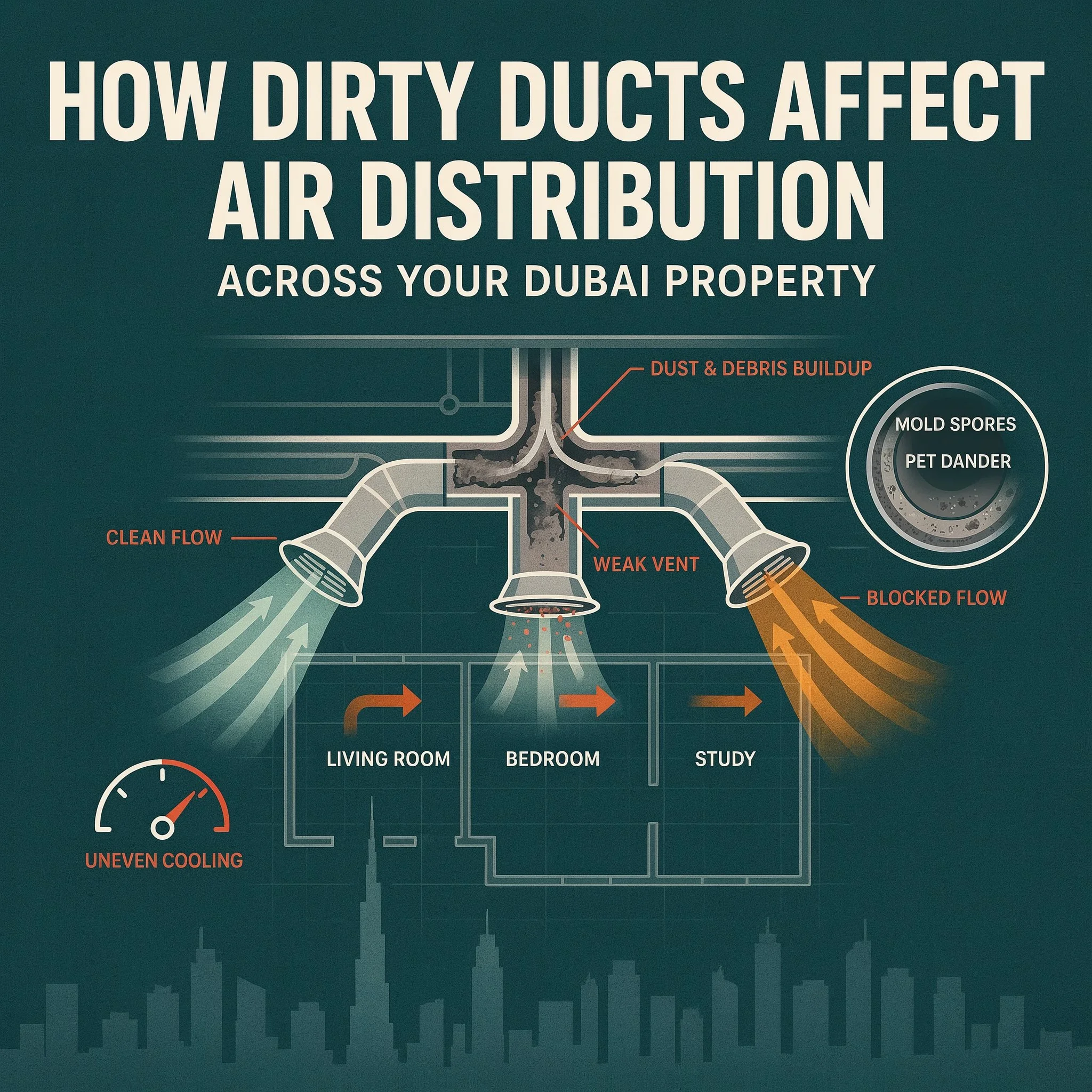
Hospitals and clinics in Dubai rely heavily on centralized HVAC systems that service large floor areas. When ductwork becomes blocked with dust and debris, airflow becomes uneven. Some areas of the facility receive insufficient fresh air while others are over-pressurized. This imbalance disrupts the controlled airflow patterns essential for infection control, particularly in isolation rooms and surgical suites.
The result is an environment where the AC system is working harder, consuming more energy, and delivering worse results all while putting patients and staff at risk.
Why Poor Airflow Happens in Clinics and Hospitals
Understanding the root causes of poor airflow helps facility managers take the right preventive steps. There are several common reasons why hospital air quality in Dubai deteriorates over time.
Dust Buildup in Dubai’s Environment
Dubai’s desert climate means that airborne dust levels are significantly higher than in most other cities. Fine sand particles enter buildings constantly, passing through outdoor air intake vents and settling inside ductwork. Over time, this dust accumulates into thick layers that restrict airflow and carry microbial contaminants.
Without regular AC duct cleaning, Dubai hospitals and clinics face a faster buildup rate compared to facilities in cooler or less dusty climates. This makes frequent professional cleaning not just beneficial but essential.
Clogged and Degraded Filters
Air filters are the first line of defense against airborne particles. In a healthcare setting, filters must be inspected and replaced more frequently than in commercial or residential buildings due to the high volume of foot traffic and the sensitivity of the environment.
When filters become clogged, they stop capturing particles effectively. Worse, a saturated filter can become a source of contamination itself, releasing previously trapped bacteria and mold spores back into the airstream.
Microbial Growth in Cooling Units
The combination of moisture, darkness, and organic debris inside air conditioning units creates ideal conditions for mold and bacterial growth. Legionella bacteria, Aspergillus mold, and other dangerous microorganisms thrive in poorly maintained HVAC components.
In a hospital or clinic environment, these pathogens present serious infection control risks. Clinic AC maintenance in Dubai must specifically target cooling coils, drain pans, and condensate lines where microbial growth is most common.
Lack of Scheduled Maintenance
Many healthcare facilities in Dubai operate without a formal, documented HVAC maintenance schedule. Maintenance is reactive rather than preventive, meaning that cleaning only happens after a visible problem appears. By that point, contamination has typically been circulating for weeks or months.
How AC Cleaning Improves Airflow in Clinics and Hospitals

Professional AC cleaning addresses each of the root causes described above through a systematic, multi-step process. Here is how each component of the cleaning process translates into better airflow and safer air.
Removal of Dust and Debris from Ductwork
AC duct cleaning in Dubai hospitals involves the use of high-powered vacuum systems and rotating brush tools to dislodge and extract accumulated dust from the interior of supply and return ducts. Once this debris is removed, air can flow freely through the ductwork without restriction.
The improvement in airflow volume can be significant. Facilities that undergo full duct cleaning often report measurable increases in air delivery rates, meaning that ventilation systems can maintain the required air changes per hour more efficiently.
Improved Ventilation Efficiency
Clean HVAC components allow the system to operate at its designed capacity. When coils, fans, and filters are free from fouling, the system moves air more efficiently and maintains the temperature and humidity levels specified in healthcare guidelines.
ASHRAE Standard 170 sets specific requirements for ventilation in healthcare facilities, including minimum air changes per hour for different room types. A clean system is far more capable of meeting these standards than one compromised by dust and biological growth.
Balanced Air Circulation Throughout the Facility
One of the most important aspects of airflow improvement in hospitals is achieving balanced pressure relationships between different zones. Operating rooms must maintain positive pressure to prevent contaminants from entering. Isolation rooms for infectious patients must maintain negative pressure to prevent contaminated air from escaping.
These pressure differentials depend entirely on the HVAC system functioning as designed. Clean, unobstructed ductwork and properly functioning dampers allow facility engineers to maintain the correct pressure balance across all zones.
Reduction of Airborne Contaminants
Beyond dust removal, professional HVAC cleaning includes antimicrobial treatment of duct surfaces, coils, and drain pans. This treatment eliminates existing microbial colonies and leaves a protective coating that inhibits future growth.
The result is a dramatic reduction in the concentration of airborne bacteria, mold spores, and other biological contaminants in the circulated air. This directly supports infection control HVAC Dubai standards and reduces the risk of healthcare-associated infections.
Key Benefits of AC Cleaning for Healthcare Facilities in Dubai
Investing in regular professional AC cleaning delivers a wide range of measurable benefits for clinics and hospitals. These benefits extend from direct patient safety improvements to long-term cost savings.
Better Indoor Air Quality
Clean HVAC systems deliver fresher, cleaner air to every part of the facility. Patients breathe easier, staff experience fewer respiratory complaints, and the overall atmosphere of the building feels healthier and more comfortable.
Improved hospital air quality in Dubai is directly linked to better patient experiences and faster recovery times in facilities that prioritize it.
Stronger Infection Control
Healthcare-associated infections represent one of the most significant challenges in modern hospital management. The Centers for Disease Control and Prevention (CDC) identifies environmental contamination, including airborne transmission, as a key factor in HAI transmission.
Regular HVAC cleaning and sanitation is one of the most effective environmental interventions for reducing HAI rates. Clean ducts, filters, and cooling components mean fewer pathogens in the air that patients and staff breathe.
Enhanced Patient Safety and Comfort
Patients undergoing treatment are already under physical stress. Poor air quality adds unnecessary physiological burden. Clean, well-circulated air supports the body’s natural recovery processes, reduces fatigue among staff, and creates an environment that signals professional care and attention to detail.
Energy Efficiency and Cost Reduction
A clean HVAC system operates more efficiently than a dirty one. When airflow is unobstructed and heat exchange surfaces are clean, the system uses less electricity to achieve the same cooling effect.
For large hospitals and multi-floor clinics, the energy savings from regular HVAC maintenance can be substantial. This makes investment in clinic AC maintenance Dubai not just a health decision but a sound financial one.
Compliance with Healthcare and Regulatory Standards
Healthcare facilities in Dubai must comply with standards set by the Dubai Health Authority (DHA) and align with international guidelines from organizations like ASHRAE and the Joint Commission International (JCI). Regular, documented HVAC cleaning is a component of these compliance requirements.
Facilities that maintain thorough maintenance records and can demonstrate consistent air quality management are better positioned during regulatory inspections and accreditation reviews.
Practical Tips and Best Practices for HVAC Maintenance in Healthcare Facilities
Knowing what to do is only useful if you have a clear plan for implementation. The following best practices provide a framework for facility managers responsible for medical facility hygiene Dubai standards.
Establish a Documented Maintenance Schedule
Every healthcare facility should have a written HVAC maintenance schedule that specifies:
- Monthly inspections of filters and visible duct sections
- Quarterly cleaning of cooling coils and drain pans
- Semi-annual full duct cleaning for high-traffic areas
- Annual comprehensive system inspection and antimicrobial treatment
This schedule should be adjusted based on the facility’s size, patient volume, and specific clinical functions.
Replace Filters on a Defined Timetable
Filter replacement should never be based on appearance alone. Establish a fixed replacement schedule based on the filter type and the manufacturer’s recommendations, then adjust more frequently if operating in high-dust or high-traffic conditions.
HEPA filters used in operating theaters and isolation rooms require particularly strict replacement protocols. A degraded HEPA filter provides almost no protection and can be worse than no filter at all.
Monitor Airflow Performance Continuously
Install air quality monitors and pressure sensors in critical areas including operating rooms, ICUs, and isolation rooms. Continuous monitoring allows facility teams to detect deterioration in air quality or pressure balance before it becomes a health risk.
Review monitoring data regularly and use it to inform maintenance scheduling. A sudden drop in airflow performance is often the first sign of filter clogging or duct obstruction.
Train and Assign Responsibility
Designate a specific team member or department as responsible for HVAC maintenance oversight. Ensure that all relevant staff understand the importance of reporting unusual odors, visible dust around vents, or fluctuations in room temperature. Early reporting leads to faster resolution of emerging problems.
Common Mistakes That Healthcare Facilities Must Avoid

Even facilities with the best intentions can fall into habits that undermine their air quality management efforts. Here are the most common mistakes observed in clinics and hospitals across Dubai.
Ignoring Routine Maintenance Until a Problem Becomes Visible By the time mold growth or airflow failure is obvious to the naked eye, contamination has typically been present for an extended period. Preventive maintenance is always more effective and less costly than emergency intervention.
Relying on Untrained Technicians for HVAC Cleaning Healthcare HVAC systems are specialized equipment with specific requirements for cleaning chemicals, containment procedures, and documentation. General maintenance staff or residential AC technicians are not equipped to handle this work correctly. Incorrect cleaning in a hospital setting can spread contamination rather than eliminate it.
Delaying AC Duct Cleaning Due to Operational Disruption Concerns Some facility managers postpone duct cleaning because the process requires temporary section shutdowns. This short-term operational inconvenience is insignificant compared to the long-term risk of contaminated air in patient areas. Professional teams like Microcare can schedule cleaning during low-activity periods to minimize disruption.
Using Generic Cleaning Products Not Approved for Healthcare Settings Standard commercial cleaning agents may be effective in office buildings but are not appropriate for healthcare HVAC systems. Medical facility hygiene Dubai standards require the use of EPA-approved or equivalent antimicrobial products that are safe for use in environments where vulnerable patients are present.
Failing to Document Maintenance Activities Without proper records, it is impossible to demonstrate compliance during regulatory inspections or to identify patterns in system performance. Every maintenance activity should be logged with dates, technician details, materials used, and observations noted.
Why Professional AC Cleaning Is Essential for Clinics and Hospitals in Dubai
The complexity and critical importance of healthcare HVAC systems means that this work should always be entrusted to specialists. Microcare provides professional AC cleaning in clinics and hospitals in Dubai with the expertise, equipment, and protocols that healthcare environments demand.
Specialized Equipment and Techniques
Professional HVAC cleaning for healthcare facilities requires industrial-grade vacuum systems, video inspection cameras, rotary brush equipment, and pressure-controlled containment tools. Microcare’s technicians use the right equipment for each component of the system, ensuring thorough cleaning without cross-contamination.
Healthcare-Specific Protocols
Cleaning a hospital HVAC system is fundamentally different from cleaning a commercial office system. Microcare follows healthcare-specific protocols that include proper personal protective equipment, contamination containment procedures, and safe disposal of extracted debris. All work is conducted in compliance with DHA guidelines and international healthcare standards.
Antimicrobial Treatment and Certification
Following mechanical cleaning, Microcare applies approved antimicrobial coatings to duct interiors and HVAC components. This treatment eliminates residual microbial colonies and provides ongoing protection against regrowth. Full documentation and certification is provided after every service, supporting your facility’s compliance records.
Explore our services: AC Duct Cleaning Services | HVAC Maintenance Solutions | Indoor Air Quality Improvement
Featured Snippet Answers
How does AC cleaning improve airflow in hospitals?
AC cleaning removes accumulated dust, debris, and microbial growth from ducts, filters, and cooling components. This allows air to flow freely at designed capacity, restores proper pressure balance between zones, and reduces the concentration of airborne contaminants in circulated air.
Why is HVAC cleaning important in clinics?
Clinics serve patients with weakened immune systems who are vulnerable to airborne infections. A contaminated HVAC system circulates bacteria, mold spores, and allergens directly into patient areas. Regular cleaning eliminates these risks and supports infection control standards required by healthcare regulators.
How often should hospital AC systems be cleaned?
Filters should be inspected monthly and replaced quarterly or more frequently depending on usage. Cooling coils and drain pans should be cleaned every three to six months. Full duct cleaning should be performed at least annually, with more frequent cleaning in high-risk areas like operating theaters and ICUs.
Frequently Asked Questions
Q1: How often should AC systems in Dubai hospitals be professionally cleaned?
For hospitals in Dubai, full professional AC cleaning should be performed at least once a year for general areas and every six months for high-risk zones such as operating theaters, ICUs, and isolation rooms. Given Dubai’s dusty climate, quarterly filter maintenance is strongly recommended.
Q2: What healthcare HVAC standards apply to clinics and hospitals in Dubai?
Healthcare facilities in Dubai must comply with Dubai Health Authority (DHA) environmental health regulations, ASHRAE Standard 170 for healthcare ventilation, and international accreditation requirements from bodies such as JCI. Regular documented HVAC cleaning is a core component of compliance with all of these frameworks.
Q3: Can poor HVAC maintenance increase the risk of airborne infections in hospitals?
Yes. The CDC and WHO have both identified poorly maintained HVAC systems as a contributing factor in healthcare-associated infections. Contaminated ductwork can harbor and distribute bacteria including Legionella, Staphylococcus, and fungal organisms like Aspergillus that pose serious risks to immunocompromised patients.
Q4: What is the typical cost of professional AC cleaning for a healthcare facility in Dubai?
The cost varies depending on the size of the facility, the number of HVAC units, the condition of the ductwork, and the specific services required. Microcare provides customized quotations based on a thorough assessment of your facility. Investing in regular maintenance is consistently more cost-effective than addressing emergency failures or healthcare-associated infection outbreaks.
Q5: What are the main benefits of hiring a professional AC cleaning company for a hospital?
Professional services provide access to specialized equipment, healthcare-approved antimicrobial treatments, trained technicians familiar with infection control protocols, and full documentation for regulatory compliance. Microcare brings all of these capabilities together in one reliable service tailored for healthcare facilities across Dubai and the UAE.
Conclusion: Cleaner Air Starts With the Right Partner
The air inside your clinic or hospital is not just a comfort factor. It is a clinical environment that directly influences patient safety, infection rates, staff health, and regulatory compliance. AC cleaning in clinics and hospitals in Dubai is a non-negotiable investment in the quality of care you provide.
From eliminating dust buildup and microbial growth to restoring balanced airflow and meeting ASHRAE and DHA standards, professional HVAC cleaning touches every aspect of how your facility functions. The risks of neglect are too serious to ignore, and the benefits of regular maintenance are too significant to overlook.
Microcare is Dubai’s trusted specialist in healthcare HVAC cleaning. With proven protocols, industry-grade equipment, and a deep understanding of the unique demands of medical environments, Microcare helps clinics and hospitals across the UAE maintain the clean, safe, and compliant air quality their patients deserve.
Contact Microcare today to schedule your facility assessment and take the first step toward healthier air for your patients and staff.